
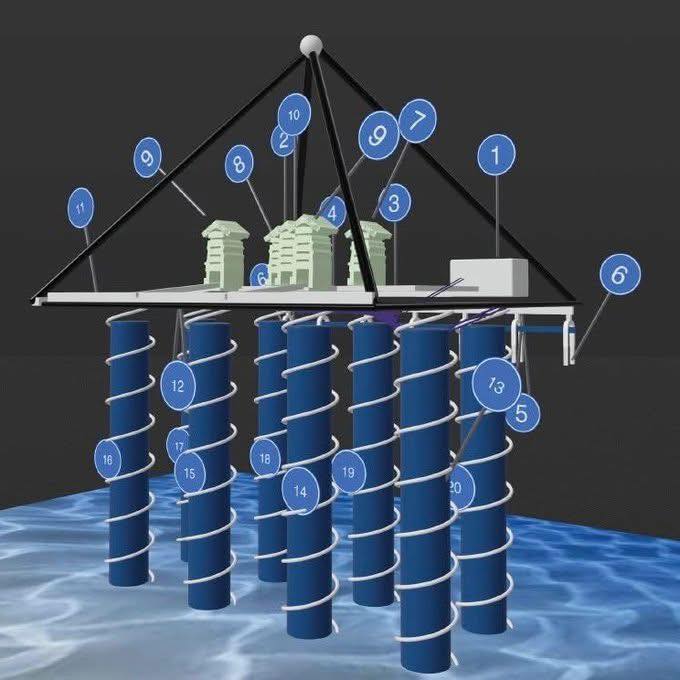
If you’ve been scrolling through social media lately, you may have come across quite a sensational claim: monumental underground structures reaching deep beneath the Pyramids of Giza! Hidden chambers, spiral tunnels, and massive rooms stretching thousands of feet below the surface. But before you get carried away, it’s worth checking if this story holds up to scrutiny. Because, spoiler: it doesn’t.
While all this attention seems to have started with a recent video press release (with a bit of a track record in terms of UFO conspiracies, speculative “lost civilizations”, and other “hidden truths”) it actually goes back a bit further to a paper published almost three years ago (F. Biondi & C. Malanga, Remote Sens. 14(20), 2022 🔓). That for some reason this seemingly huge discovery hasn’t hit the headlines much sooner should be noteworthy, as should the fact that apparently no one with a background in Egyptology or archaeology appears to have been involved in the study – which has not undergone the usual peer review process and remains the only source for any of these discoveries to date.
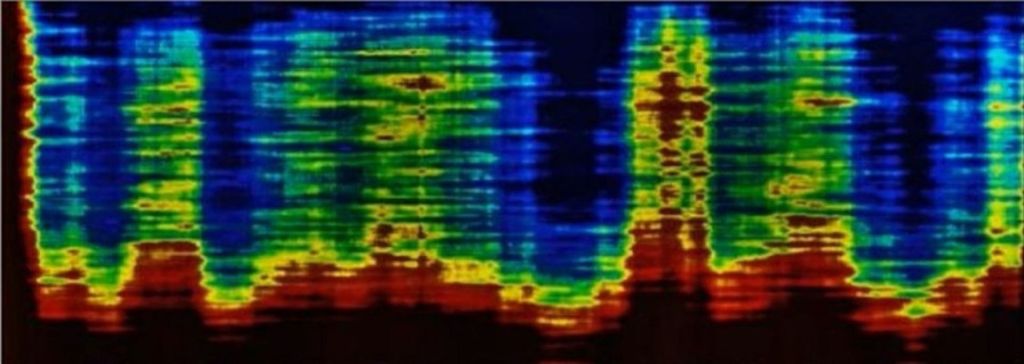
Graphic: after N. Ciccolo via YouTube
And, well, there might be a reason for this. The new findings that have been so enthusiastically discussed are based on the results of a radar-based survey. The technology in question, Synthetic Aperture Radar or SAR, is an indeed innovative method of archaeological prospection, but it doesn’t provide ready-to-use images of underground chambers and tunnels. Instead, it delivers measurements of surface density based on the echoes of radar pulses sent to the ground from an aircraft or satellites. As the sensor moves, SAR compiles multiple readings from different angles to create a high-resolution image. The signal cannot penetrate very deep into the earth, typically from a few centimetres to about a metre depending on the frequency, with an optimistic 10 metres in ideal conditions, allowing researchers to identify surface and subsurface anomalies. Anomalies that require expert interpretation and ground verification to avoid misunderstanding these results, which may not even be artificial structures, but could be rock formations, water channels or simply a shift in soil composition. To postulate extensive and deep underground structures on the basis of this data alone is, to be honest, quite a leap.
Decades of archaeological research and excavation on the Giza plateau have greatly increased our knowledge of the pyramids themselves, their surroundings and their context over the years, revealing numerous structures, finds and features. But nothing to suggest such a vast underground complex. Yet, the geology and hydrology of the Giza Plateau area, too, have been well studied. We know that the groundwater there isn’t particularly deep – both in the past, when tributaries of the Nile reached as far as the pyramids, and in the present, where the water table is located at about 14 to 17 metres (although it drops a little further towards the Menkaure pyramid). This should have had a big impact on the construction of these allegedly deep reaching underground structures, and certainly on the interpretation of SAR results. Or so you’d think. But this is not really addressed or explained in either the original publication of the survey results nor current reporting, which is irritating to say the least. New technologies such as SAR are exciting and continue to advance the field – but there’s a difference between interpreting survey data and actually proving the existence of highly sophisticated structures that must have remained hidden for so long.
So, is there now an underground city beneath the Pyramids of Giza – or is there not? Well, you can never prove a negative, can you? But so far there’s no credible evidence to suggest so. That may change as more research is done. Or it may not. But until then, the current debate is a lot of hot air, I’m afraid. Pretty thin air. Sure, we all sometimes love the idea of a good hidden ancient secret, but archaeology is ultimately about analysis and verification, not wild speculation. And certainly not about viral videos promising the next big conspiracy.
 Trowel & Pen