
Despite causing so much excitement, the Denisovans have been rather elusive until now. The dozen small fossil remains have not really provided us with a clear picture of how these Middle Palaeolithic people looked like. It was largely thanks to DNA analyses that we were able to identify them as a distinct species. But as now turned out, we apparently have had a Denisovan skull all the time since the 1930s already, albeit unknowingly.
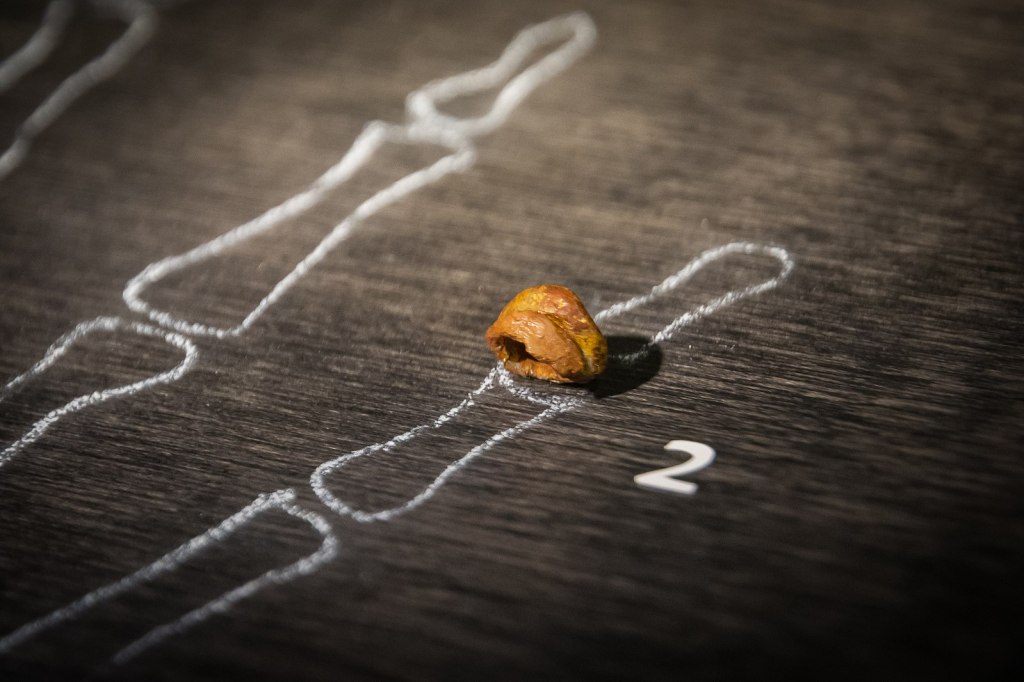
In 2010, colleagues at the Max Planck Institute for Evolutionary Anthropology in Leipzig needed little more than a tiny finger bone to sequence the DNA of a 13-year-old girl who had lived between 52,000 and 76,000 years ago. A tiny bone with quite some big impact: The girl apparently belonged to a previously unknown population of hominins that was closely related to Neanderthals and Homo sapiens, but genetically distinct from both. They have since been referred to (although the official naming of a new species has not yet been completed) as Denisova hominins after the location where the bones were originally discovered, Denisova Cave in the Altai Mountains in Siberia.
Since then, more finds have been identified and attributed to Denisovans. These include additional bone fragments, partial mandibles and teeth from the Denisova Cave in Russia, as well as from sites in Taiwan, Laos and China. Together, these finds have extended the estimated timeframe for this hominin population to between 25,000 and 285,000 years ago.
Also from China, and estimated to be about 146,000 years old, comes the so-called Harbin Skull, which was presumably discovered already in 1933 (or maybe later; that’s quite a story in itself), but received official – and scientific – recognition only in 2018. Three years later the genus name Homo longi was introduced, certainly controversial, for the apparently unknown hominin the skull represented (but it remained the only evidence so far). The species suffix “longi” actually refers to the Chinese province of Heilongjiang, where the fossil was discovered. However, as Long (or Loong) is also the name of the dragon in Chinese mythology, the fossil soon became popular as “Dragon Man” in (western) media reports.

Further analyses have caused quite a sensation, even though the direct attempt to isolate DNA was not successful in the first place. The teeth simply did not provide sufficent material. Initially. However, this was about to change: Some human DNA that could not be attributed to the researchers who handled the skull, but rather to the tooth’s original owner, was found in the dental plaque. Even more excitingly, this finding was consistent with an analysis of the proteins responsible for building the DNA! Turns out, this new species has an old face: The Harbin skull, it seems, belonged to a Denisovan.
(Not everyone is completely convinced yet, though. Critical voices, including one of the authors of the original study that proposed Homo longi as a new species, question whether the protein analysis is specific enough and degraded DNA sufficient for such a classification. The fact that two different analysis methods produced the same result, however, could be considered a promising start.)
 Trowel & Pen